


.svg)
AI Data Readiness Assessment
Understand whether your data is safe and suitable for AI so you can move forward with confidence, not risk. Data Sentinel assesses your data across quality, sensitivity, compliance, and bias dimensions to determine its readiness for AI consumption.

.webp)
Comprehensive AI data readiness scoring
Sensitivity and compliance risk assessment for AI use
Data quality and bias analysis for AI inputs
Actionable readiness reports with remediation guidance
AI adoption is accelerating across every industry, but most organizations are feeding AI systems with data they don’t fully understand. Sensitive data leaking into AI models, poor data quality driving hallucinations and inaccurate outputs, compliance violations from unregulated data usage, and hidden biases producing discriminatory results these are not hypothetical risks. They are happening right now in enterprises around the world.
Data Sentinel’s AI Data Readiness Assessment gives you a clear, structured evaluation of whether your data is truly ready for AI. The assessment examines your data across four critical dimensions: sensitivity (is regulated or confidential data at risk of AI exposure?), compliance (do your data handling practices meet regulatory requirements for AI usage?), quality (is your data accurate, complete, and reliable enough to produce trustworthy AI outputs?), and bias (does your data contain patterns that could produce discriminatory or unfair AI results?).
Confidentiality Risks
Sensitive company information, like financial records, employee data, customer data, and trade secrets, may be exposed to AI models that reveal information to people who are unauthorized to see this kind of data.
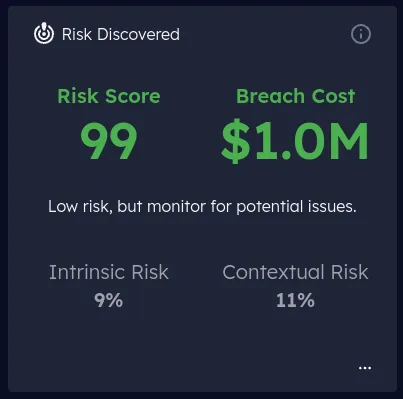
Data Sentinel classifies and tags sensitive data at both enterprise and departmental levels, ensuring confidential information remains protected from AI exposure. By automating risk mitigation, it securely identifies and surfaces the right data to empower AI-driven insights.
.webp)
Privacy Compliance & Legal Issues
Many organizations and industries have strict regulations on data handling such as GDPR, CCPA, and HIPAA. Sharing data with AI tools might violate these regulations if not properly governed. Cross-border data transfer rules may be breached if AI services operate in different jurisdictions.
Data Sentinel automates data mapping for privacy compliance, eliminating the need for costly customizations and integrations. It seamlessly discovers, classifies, tracks, and governs regulated data—tagging it for de-identification, restricted access, or AI exposure. This ensures full compliance with data management policies and regulations.
Data Integrity & Bias Risks
AI models, when trained on incorrect, out-of-date or selective sets of information, might misinterpret or manipulate company data in unintended ways, leading to incorrect business decisions.
Data Sentinel analyzes data for currency, accuracy, and bias, allowing organizations to automate remediation tasks before exposing data to AI. This ensures reliable, high-quality inputs, giving users confidence in AI-driven outputs.
.webp)
.webp)
Poor Results & Unrealized Value
The full potential of AI can only be realized when the right data, aligned with specific use cases and tailored to individual knowledge workers, is properly exposed to the model.
Data Sentinel not only protects your sensitive data assets but also identifies the right data for specific AI use cases through our Document Intelligence capability. The platform learns and understands data context, providing insights into what each data asset is and how it aligns with AI-driven use cases.
Frequently asked questions
What is a data trust platform?
How do you prepare data for AI safely?
What is AI data governance and why does it matter?
How is Data Sentinel different from traditional data governance tools?
Does Data Sentinel move or store our data externally?
How does Data Sentinel help with data privacy compliance (GDPR, CCPA, HIPAA)?
What is data discovery and classification?
How do you reduce data risk and exposure across enterprise systems?
- What does an AI Data Readiness Assessment involve? The assessment evaluates your data across four key dimensions: sensitivity (risk of regulated or confidential data entering AI systems), compliance (adherence to data privacy and AI regulations), quality (accuracy, completeness, and reliability of data), and bias (presence of patterns that could produce discriminatory AI outputs). You receive a structured readiness report with prioritized remediation recommendations.
- Why is data readiness important for AI adoption? Poor data quality leads to AI hallucinations and inaccurate outputs. Uncontrolled sensitive data exposure creates regulatory and legal risk. Hidden biases produce discriminatory results. Without assessing data readiness, organizations face significant financial, legal, and reputational risks from their AI investments.
- Which regulations apply to data used in AI systems? Multiple regulations impact AI data usage, including GDPR (data protection and automated decision-making), CCPA/CPRA (consumer privacy rights), HIPAA (health information), the EU AI Act (AI-specific governance), and various industry-specific standards. Data Sentinel’s assessment evaluates your data against all applicable frameworks.
- How does Data Sentinel detect bias in data? Data Sentinel analyzes data distributions, representation patterns, historical decision data, and feature correlations to identify potential sources of bias. The platform flags underrepresentation, skewed distributions, proxy variables, and other patterns that could lead to unfair or discriminatory AI outcomes.
- Can the assessment be customized for our specific AI use cases? Yes. Data Sentinel’s AI readiness assessment can be tailored to evaluate data readiness for specific AI applications, whether that’s customer service automation, predictive analytics, document processing, or any other use case. The assessment criteria are adapted to reflect the particular sensitivity, quality, and compliance requirements of each use case.
- How long does an AI Data Readiness Assessment take? The timeline depends on the scope and complexity of the data environment being assessed. A focused assessment on specific data sources for a defined AI use case can be completed in days. Broader, enterprise-wide assessments may take one to two weeks. Data Sentinel’s automated scanning accelerates the process significantly compared to manual reviews.
- What happens after the assessment? You receive a detailed readiness report with findings, risk scores, and a prioritized remediation roadmap. Data Sentinel can then help you execute on remediation — including data cleansing, de-identification, sensitivity tagging, and ongoing monitoring — so your data is truly ready for AI consumption.
BOOK a demo
Oops! Something went wrong while submitting the form.
About Data Sentinel
Protect, Comply, Govern, and Grow with Trusted Data
Data Sentinel helps enterprises turn fragmented, high-risk data into a trusted, controlled asset. Its unified platform combines data discovery, governance, privacy, and quality, giving organizations the visibility and control needed to reduce risk, meet compliance requirements, and safely deploy AI at scale.
Built to operate directly inside your environment, Data Sentinel ensures sensitive data never needs to be moved, delivering policy-driven enforcement, continuous monitoring, and true data control where it matters most.
Built to operate directly inside your environment, Data Sentinel ensures sensitive data never needs to be moved, delivering policy-driven enforcement, continuous monitoring, and true data control where it matters most.
OUR HAPPY CLIENTS
- Something went wrong